Quick Swap System
Scalable striking system for varied training styles
Scalable striking system for varied training styles
Overview
The Quick Swap System reimagines freestanding combat training as a modular platform rather than a collection of standalone products. Built around a shared base architecture, the system supports four interchangeable striking tops with fundamentally different training behaviours, from heavy-impact striking to reflex, precision, and anatomical training.
Rather than developing an entirely new product family, the platform was built by transforming Hayabusa's existing reflex bag infrastructure into a scalable foundation. Through iterative prototyping, engineering collaboration, and mechanical validation, the project balanced conflicting force dynamics, stability, durability, and manufacturability within one expandable system designed to grow alongside future training products.
The Quick Swap System transforms an existing reflex bag platform into a modular training ecosystem capable of supporting four distinct combat training modalities through one shared foundation.
By balancing platform strategy with complex engineering constraints, the project established a scalable system designed to expand beyond a single product into a growing family of interchangeable training solutions.
Company
Hayabusa Fightwear
Hayabusa Fightwear
Role
Lead Industrial Designer
Lead Industrial Designer
Solo Project
Solo Project
Launch
January 2026
January 2026
Skill Focus
Platform Thinking
Modular Systems
Category Innovation
Awards
2026 FIT Sport Design Awards
2026 FIT Sport Design Awards
Innovation & Combat Sports
Innovation & Combat Sports
The Opportunity
Identifying the opportunity for platform innovation
Research revealed that the greatest opportunity wasn't improving individual freestanding punching bags, it was addressing the fragmented nature of the category. Athletes often relied on multiple standalone products to support different training styles, while manufacturers continued developing independent systems that duplicated infrastructure, occupied valuable floor space, and limited long-term versatility.
The challenge became rethinking the platform itself: exploring how a single shared foundation could support multiple training modalities while creating a scalable framework for future product expansion.
Research revealed an opportunity to rethink the category through shared infrastructure rather than standalone products.
Instead of developing another freestanding bag, the project explored how a single platform could support multiple training modalities while creating a scalable foundation for future expansion.
Category Exploration


Opportunity Insights


Platform Exploration


Platform Foundation
Transforming existing infrastructure into a shared platform
Rather than developing an entirely new product platform, the project strategically leveraged Hayabusa's existing Cobra Reflex Bag infrastructure as the foundation for future expansion. Reusing proven manufacturing assets reduced development complexity while creating an opportunity to rethink how freestanding training products could be architected.
This decision fundamentally changed the project. A platform originally engineered for a single reflex training modality now needed to evolve into shared infrastructure capable of supporting multiple interchangeable products with entirely different performance requirements.
Rather than developing an entirely new platform, the project transformed Hayabusa's existing Cobra Reflex Bag into shared infrastructure capable of supporting future product expansion.
A system originally designed for one training modality now became the foundation for a modular training platform.


Engineering Constraints
Balancing four distinct training behaviours within one platform
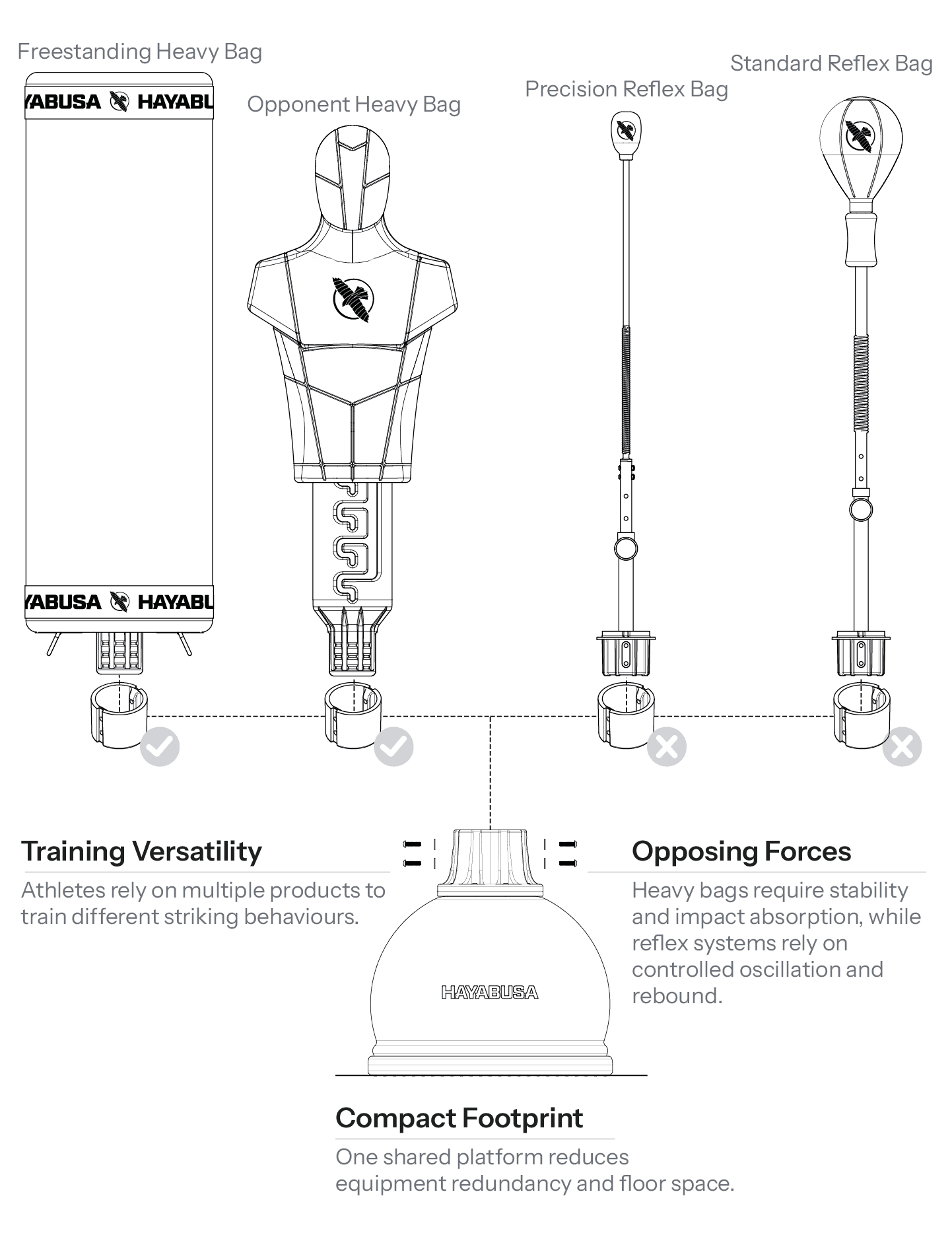
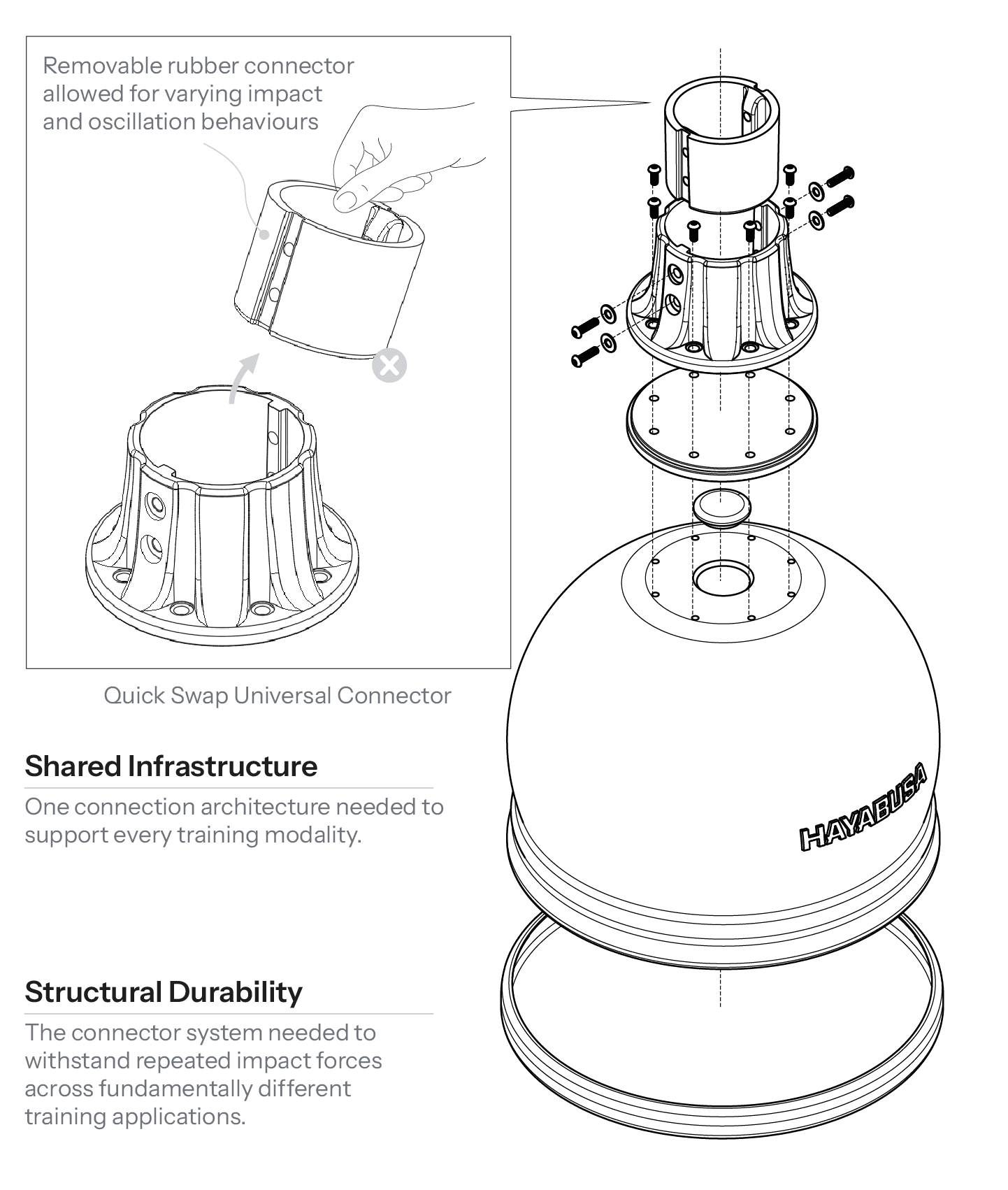
Reusing an existing platform introduced competing mechanical requirements across every product. Heavy-impact bags demanded structural rigidity and energy absorption, while reflex systems relied on controlled oscillation and rebound. Supporting these opposing force behaviours within one shared architecture required every interface, component, and connection to be carefully engineered.
Beyond performance, the platform also needed to balance training versatility, long-term durability, manufacturing feasibility, and a compact footprint without compromising the flexibility of the modular system.
A shared platform introduced competing force dynamics across every training modality. The system needed to balance structural durability, controlled rebound, versatility, and manufacturability while maintaining one interchangeable architecture.


Prototyping & Validation
Refining the platform through iterative testing
Developing a modular platform required continuous prototyping, testing, and refinement across every stage of the system. From connector durability and force management to anatomical development and assembly optimization, each iteration informed the next, reducing technical risk while improving manufacturability, installation, and long-term performance.
Rather than validating a finished solution, prototyping became the primary tool for understanding how each component interacted within the larger platform, ensuring every design decision contributed to a robust and scalable system.
Continuous prototyping and testing refined every aspect of the platform, from connector durability and force management to assembly, manufacturability, and anatomical development.
Each iteration reduced technical risk while strengthening the performance and scalability of the overall system.


The Modular Training Ecosystem
One platform supporting varied combat training styles
The Quick Swap System transformed a single-purpose reflex bag into a modular training platform capable of supporting multiple combat training modalities through one shared foundation. By combining interchangeable striking tops with a universal connection architecture, the system reduced redundant equipment while allowing athletes to adapt their training without replacing the underlying infrastructure.
Beyond the individual products, the platform established a scalable framework for future expansion, demonstrating how shared architecture can create long-term value for both athletes and future product development.
The Quick Swap System transformed a dedicated reflex bag into a modular training platform supporting multiple combat training modalities through one shared foundation.
A universal connector and interchangeable striking tops reduced equipment redundancy while establishing a scalable platform for future expansion.


Cobra Reflex Bag
The Cobra Reflex Bag served as both the inspiration and foundation for the Quick Swap platform. Its proven rebound characteristics were preserved while integrating the universal connector, allowing the original training experience to remain intact within a modular ecosystem that could now support future product expansion.
The original Cobra Reflex Bag evolved into the foundation of the Quick Swap platform through integration of the universal connector.


Pro Precision Bag
Developed for advanced speed, timing, and defensive movement, the precision bag delivers faster rebound characteristics through a refined spring and pendulum architecture. Careful tuning of spring geometry and arc length optimized responsiveness while maintaining compatibility with the shared connector and platform.
Designed for reaction speed, timing, and strike accuracy through faster rebound behavior and a smaller striking surface.



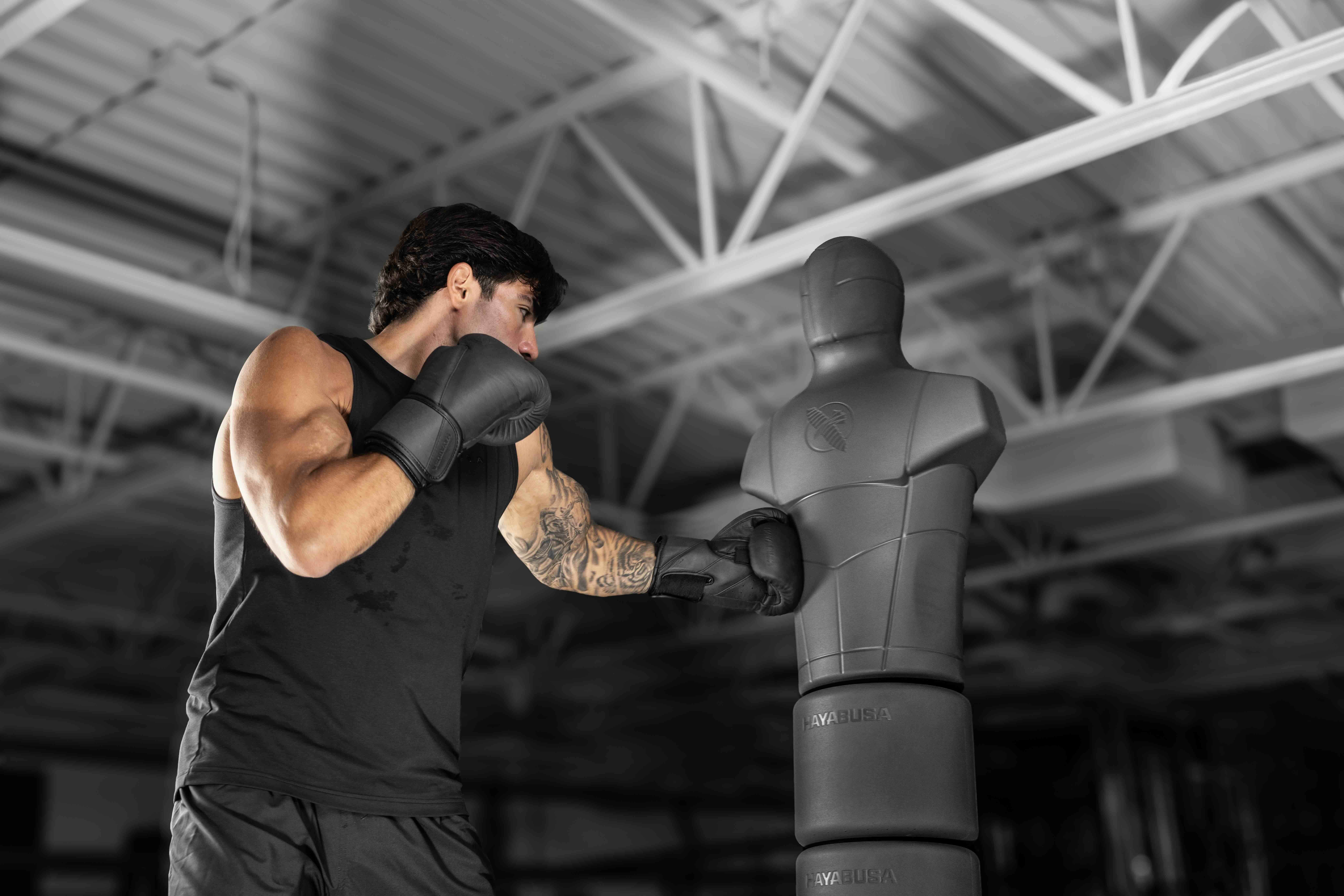
Opponent Heavy Bag
The opponent bag introduces anatomical target zones for realistic striking, improving precision across boxing, kickboxing, and mixed martial arts training. Adjustable height positions accommodate different athletes and techniques, while extensive prototyping refined body proportions, strike zones, and the locking mechanism to balance secure retention with intuitive adjustment.
Anatomical strike zones and adjustable height support realistic training, while iterative development refined body geometry and the locking system.


6ft Freestanding Heavy Bag
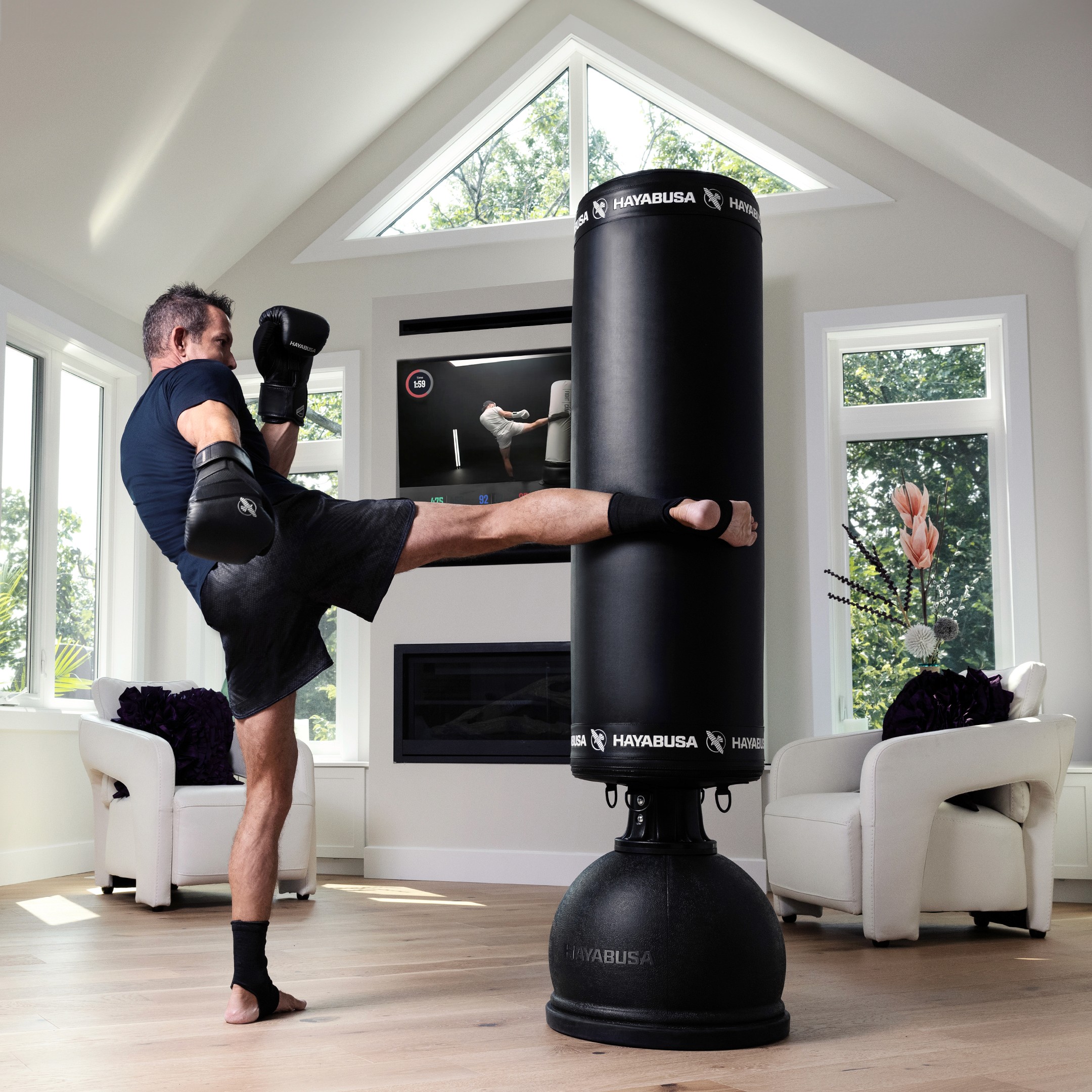
Designed for high-impact boxing, kickboxing, and conditioning, the freestanding heavy bag delivers the stability and striking confidence expected from a traditional heavy bag while integrating seamlessly into the Quick Swap platform. A reinforced connector and rubber impact sleeve absorb heavy loads and reduce force transfer into the shared base, allowing the platform to support repeated high-energy strikes without compromising durability.
Additional stabilization features including the rubber traction base and optional anchoring system helped reduce unwanted movement during intense training sessions.
Built for heavy-impact striking, the freestanding bag uses a reinforced connector and elastomer sleeve to manage impact loads while maintaining platform durability.



Reflection
Platform thinking beyond the product
The greatest outcome of this project wasn't developing four new training products, it was demonstrating how platform thinking can reshape an entire product category. By identifying an opportunity to leverage existing infrastructure rather than replace it, the project balanced user needs, engineering complexity, manufacturing realities, and long-term business value within a single scalable system.
More importantly, the experience reinforced that meaningful innovation often comes from reframing the problem rather than pursuing a completely new solution. Establishing shared architecture created opportunities that extended well beyond the initial product roadmap, providing a foundation for future development while delivering a more versatile and efficient experience for athletes.
This project reinforced that meaningful innovation isn't always about creating something entirely new, it's often about redefining how existing systems create value.
By transforming dedicated infrastructure into a scalable platform, the Quick Swap System established a foundation for future innovation while delivering greater versatility for athletes.